Guide
Moroccan Couscous: The Friday Tradition and How It's Made
Moroccan couscous is a Friday family tradition: hand-steamed grains, seven vegetables, sweet tfaya and a glass of lben. Here's how it's made, served and shared.
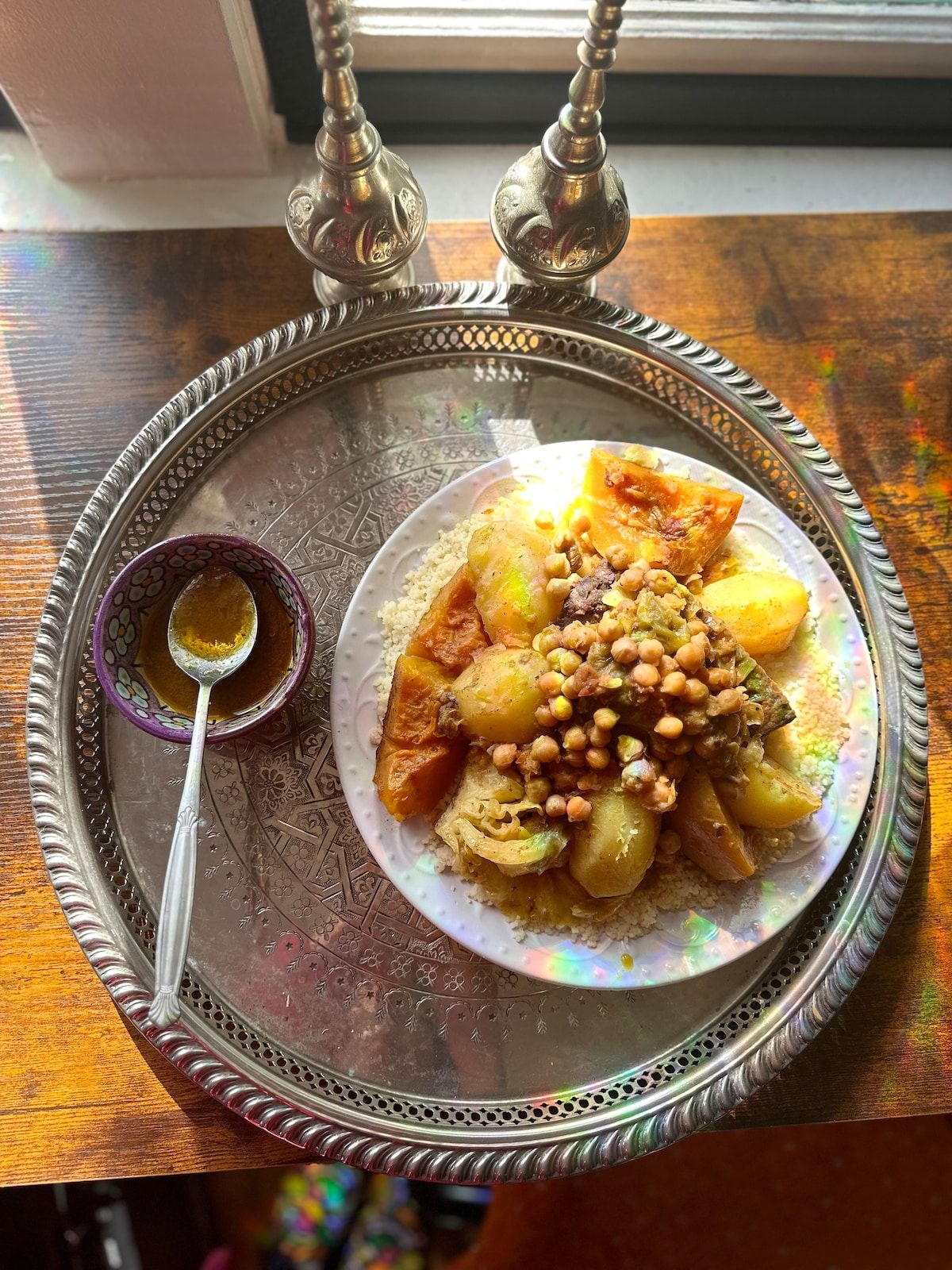
In Morocco, Friday means couscous. After the midday prayer, families gather around one big platter piled with steaming grains, tender meat and vegetables, with broth spooned over the top and more passed around the table. Moroccan couscous isn’t a side dish. It’s a weekly ritual, a dish for celebrations and one of the clearest expressions of Moroccan hospitality.
Here’s where the tradition comes from, how couscous is steamed by hand and how it’s served.
A Friday family tradition
Friday is the day of the main weekly congregational prayer, and in many Moroccan homes it’s also the day for couscous at lunch. It’s a meal that takes time, and that’s part of the point. The steaming happens by hand, everyone comes to the table and nobody rushes.
Couscous has deep roots in North Africa, where it’s known in Tamazight as seksu. Beyond Fridays, it’s the dish families turn to for gatherings and special occasions, when there are many people to feed and something to celebrate.
What Moroccan couscous is
Couscous is made from semolina, the coarse flour of durum wheat, moistened and rolled into tiny granules. In some regions it’s also made from barley and other grains. The grains are dried, then steamed before serving.
Most couscous sold in American grocery stores is precooked and ready in minutes with boiling water. It’s convenient, but it isn’t the same as couscous steamed by hand, which is lighter and fluffier, with every grain separate and fragrant with the broth beneath it.
Hand-steamed in a couscoussier
The traditional tool is the couscoussier: a tall pot topped with a perforated steamer basket. The stew simmers below while the couscous steams above, soaking up the aroma rising from the pot.
The process is simple, but it asks for patience:
- Moisten and oil. Dry couscous is sprinkled with water and rubbed with a little oil so the grains stay separate, then left to swell.
- First steaming. The grains go into the basket, uncovered, over the simmering stew. The timing starts once steam rises through the top of the couscous.
- Break and rub. The couscous is tipped into a wide dish, sprinkled with salted water and worked between the palms to break up any clumps.
- Steam again. Back it goes into the basket, usually two or three steamings in all, until the grains are tender, light and completely separate.
- Finish. A little butter or olive oil is worked through at the end.
One tip from home cooks: if steam escapes where the basket meets the pot, seal the gap with a strip of damp cloth so it all rises through the couscous instead.
Seven-vegetable couscous
The best-known Moroccan couscous is couscous with seven vegetables. The stew beneath the grains is usually made with lamb, beef or chicken, simmered with onions, tomatoes, chickpeas and spices like ginger, turmeric and saffron. The vegetables go in according to how long they need: firm ones like carrots and turnips first, tender ones like zucchini and squash later.
Which seven? That depends on the season and the family. Common choices include carrots, turnips, zucchini, pumpkin or winter squash, cabbage, eggplant, tomatoes, onions and sweet potatoes. Don’t count too carefully. The number is part of the tradition, and abundance is the goal.
For a fully plant-based version, the grains can be steamed over a vegetable broth. There’s more on that in our guide to Moroccan vegan dishes.
Tfaya, fried almonds and lben
A festive couscous often comes with a few classic companions:
- Tfaya. Onions cooked slowly with raisins, cinnamon and a little sugar or honey until jammy and caramelized. Spooned over the top, it brings a sweet contrast to the savory broth.
- Fried almonds. Blanched almonds fried until golden and scattered over the tfaya for crunch.
- Lben. Cold, tangy buttermilk, served in glasses alongside. It’s a cooling match for the warm, spiced couscous.
How couscous is served and eaten
Couscous comes to the table on one large, shallow platter. The grains are mounded high, the meat goes in the center and the vegetables are arranged around and over it. Broth is spooned over the top, and extra broth is served on the side for anyone who likes their couscous moister.
Everyone eats from the same platter, from the section in front of them. Traditionally that means rolling the couscous into small balls with the fingers of the right hand, though spoons are just as welcome. Afterward, a pot of mint tea is the natural finish.
Couscous and tagine are different dishes, by the way. In Morocco, tagine is eaten with bread, not over couscous. Our guide to what a tagine is explains the difference.
A tradition recognized by UNESCO
In December 2020, UNESCO inscribed the knowledge, know-how and practices pertaining to the production and consumption of couscous on its Representative List of the Intangible Cultural Heritage of Humanity. The nomination was shared by Algeria, Mauritania, Morocco and Tunisia, a fitting recognition of how deeply couscous is woven into life across North Africa.
Couscous at your table in Los Angeles
At MeanTagine, the traditional Moroccan couscous is served the way it is in Moroccan homes: hand-steamed couscous with seasonal vegetables, legumes and tender meat in a fragrant, saffron-infused broth, with tfaya, golden fried almonds, lben, a Moroccan dessert and a mint tea ceremony.
Chef Basmah cooks it in your home in Los Angeles or Orange County, brings the Moroccan tableware, explains the dishes and their traditions at the table and takes care of the cleanup. Her Instagram bio puts it simply: “Channeling generations through flame and spice.” A Friday couscous may be the best example of what that means.
If you’d like to gather your people around a platter of couscous, on a Friday or any day, call or email to book.