Guide
Moroccan Vegan Dishes: A Guide to the Plant-Based Classics
Moroccan vegan dishes, from smoky zaalouk and bissara to vegetable tagine and couscous: which are vegan by default, and what to watch for, like butter, smen and honey.
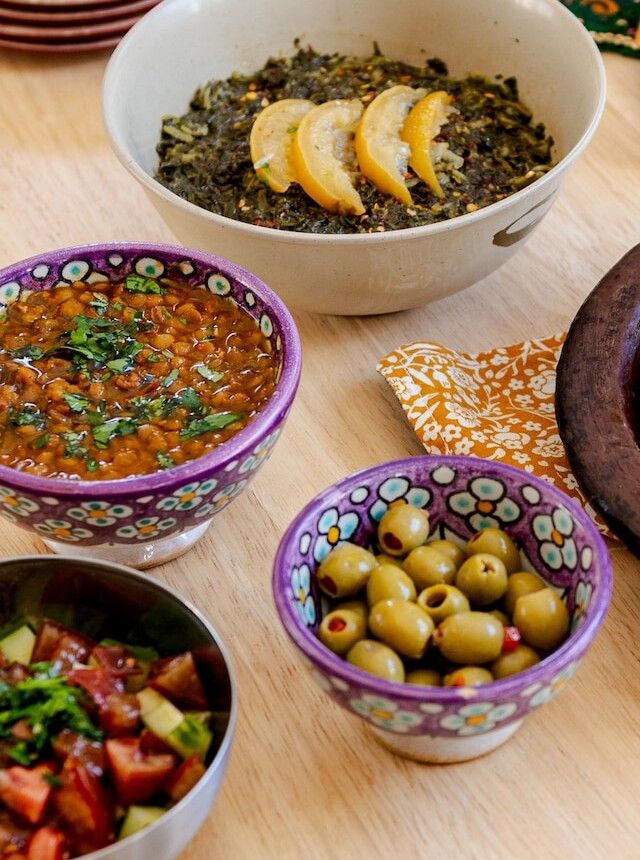
Moroccan food is famous for slow-cooked lamb and chicken, but some of its best dishes have never had meat in them at all. Smoky eggplant, sweet roasted peppers, lemony greens, comforting bean soups and golden vegetable tagines: these Moroccan vegan dishes are everyday home cooking, not substitutes for something else. If you eat plant-based, the Moroccan table is a generous place to be.
Here’s a guide to which dishes are vegan by default, which need a small tweak and what to ask about.
Why so much Moroccan food is naturally vegan
Moroccan home cooking is built on vegetables, legumes, olive oil, fresh herbs and spices. A meal often opens with a spread of small salads, many of them cooked, served warm or at room temperature with bread for scooping. Most of them are vegan as a matter of course.
Salads and spreads
Zaalouk
Eggplant, charred or roasted until smoky, then cooked down with tomatoes, garlic, cumin, paprika and olive oil into a soft, spoonable salad. It’s finished with fresh herbs and scooped up with bread. Vegan by default.
Taktouka
Roasted peppers and tomatoes simmered with garlic and spices until sweet and jammy. Think of it as zaalouk’s bright, peppery cousin. Vegan by default.
Bekkoula
Traditionally made with mallow leaves, bekkoula is a garlicky, lemony dish of cooked greens with herbs, cumin and paprika, often finished with preserved lemon and olives. In the US, spinach is the usual stand-in, and it’s delicious. Vegan by default.
Shlada
The fresh one: finely diced tomato and cucumber with onion, herbs, olive oil and lemon. Cool and crisp next to all the cooked dishes. Vegan by default.
Barba (spiced beets)
Tender beets dressed chermoula-style with garlic, cumin, herbs, olive oil and a little vinegar or lemon. Earthy, sweet and tangy. Vegan by default.
Batata mcharmla
Potatoes tossed while still warm in chermoula, the Moroccan marinade of cilantro, parsley, garlic, cumin, paprika, lemon and olive oil. A potato salad without a drop of mayonnaise. Vegan by default.
Soups and legumes
Bissara
A silky soup or thick dip of dried fava beans, sometimes made with split peas, finished with a ribbon of olive oil and a pinch of cumin. A winter favorite. Vegan by default.
Adess
Lentils simmered with tomato, onion, garlic, cumin and paprika into a thick, hearty stew. Humble and deeply satisfying. Vegan by default.
Split pea soup
A smooth, comforting soup seasoned with garlic, cumin and olive oil, and a close cousin of bissara. Usually vegan. Ask whether it’s made with water or broth.
Tagines, couscous and bread
Vegetable tagine
Carrots, potatoes, zucchini, peppers and tomatoes, slow-cooked in olive oil with ginger, turmeric, cumin or ras el hanout, often with olives or preserved lemon. Learn more about how a tagine works. Vegan when made without smen, butter or honey.
Seven-vegetable couscous
The famous Friday couscous is traditionally steamed over a meat stew and finished with butter. It becomes fully vegan when the grains are steamed over a vegetable broth and finished with olive oil. Tfaya, the sweet onion and raisin topping, is usually made with butter and sometimes honey, so it needs the same care. Read more about the Moroccan couscous tradition. Vegan with a few swaps.
Khobz and msemen
Khobz, the round everyday loaf, is typically made with flour, water, yeast and salt, sometimes with semolina. Vegan by default. Msemen, the flaky, square pan-fried flatbread, is folded with oil and often butter or smen, and it’s frequently served with honey. Ask how it’s made.
What to watch for
Moroccan food is vegan-friendly, not vegan by definition. A few ingredients are worth asking about:
- Smen. A preserved, aged butter with a strong, cheesy aroma, used in some couscous, tagines and breads.
- Butter. Worked into couscous at the end of steaming and brushed onto breads and pastries.
- Honey. Found in sweet tagines, in tfaya and in many Moroccan pastries.
- Meat or chicken broth. Traditional couscous is steamed over a meat stew, and harira, the beloved tomato, lentil and chickpea soup, often includes meat.
- Dairy on the side. Lben, a tangy buttermilk, is a classic partner for couscous.
- Eggs. They show up in some pastries and breads.
When in doubt, ask. Whoever made the dish will know exactly what’s in it.
The good news: mint tea, made with green tea, fresh spearmint and sugar, is vegan, so everyone can share in the tea ceremony.
A vegan Moroccan feast at home
At MeanTagine, the vegan Moroccan feast is built on these traditions: a slow-cooked vegetable tagine with three seasonal sides, served with warm bread and mint tea. The sides are chosen from shlada, barba, zaalouk, taktouka, batata mcharmla, bissara, adess, split pea soup and bekkoula.
Chef Basmah cooks it in your home in Los Angeles or Orange County, brings the Moroccan tableware and explains each dish at the table. She also takes care of the shopping, serving and cleanup. If you’re hoping for a dish that isn’t on a set menu, ask about a custom menu.
When you’re ready to plan a plant-based Moroccan dinner, call or email to book.