Guide
The Moroccan Mint Tea Ceremony: How Atay Is Made and Shared
The Moroccan mint tea ceremony, explained: gunpowder green tea, fresh spearmint and sugar, poured from a height for that signature foam. Here's how atay is made.
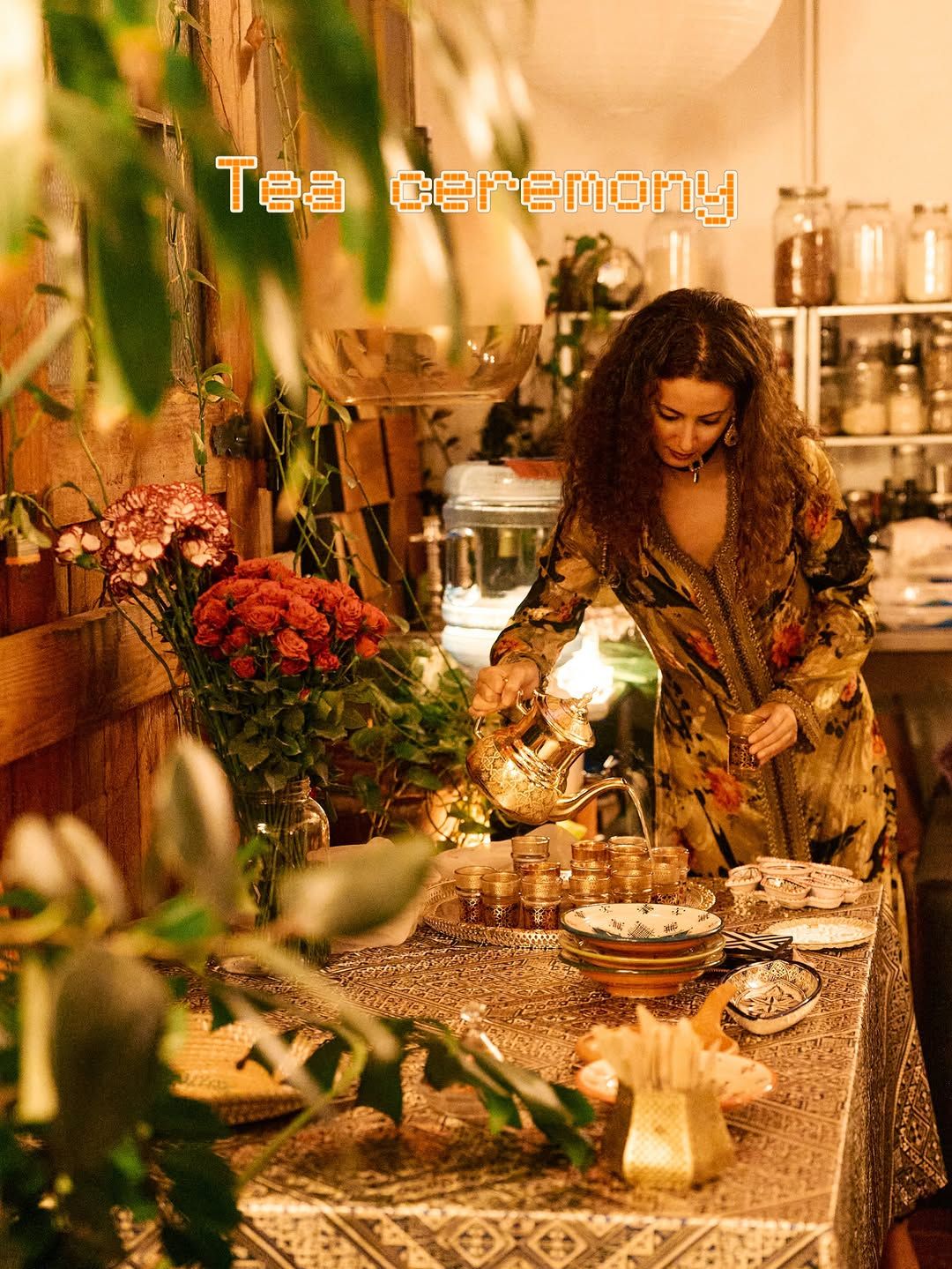
In many Moroccan homes, a visit begins with tea. A tray appears with a gleaming teapot, small glasses, a bundle of fresh mint and sugar, and the host settles in to pour. The Moroccan mint tea ceremony turns a simple drink into a gesture of welcome, and it’s one of the most generous things a host can offer.
Here’s what goes into the pot, how atay is made and poured, and why it’s part of every MeanTagine feast.
What is atay?
Atay is the Moroccan name for mint tea. It rests on three ingredients:
- Chinese gunpowder green tea. The leaves are rolled into tight little pellets that unfurl in hot water.
- Fresh spearmint. Known as nana, and used generously, a whole handful to a pot.
- Sugar. Traditionally broken off a large sugar cone.
Tea came to Morocco through trade, and Moroccans made it entirely their own. Today it’s poured throughout the day: at breakfast, after meals, in the afternoon with something sweet and whenever a guest walks through the door.
How Moroccan mint tea is made
Every family has its own rhythm, but this is the classic sequence:
- Boil the water. You’ll need it in stages, so keep the kettle close.
- Make the first infusion. Put about a tablespoon of gunpowder tea in the teapot, add a small splash of boiling water, swirl and pour it into a glass. Many cooks set this concentrated first pour aside; it’s often called the spirit of the tea.
- Rinse the leaves. Add another splash of boiling water, swirl briefly and pour it away. This rinse washes the tea and tames its bitterness.
- Build the pot. Return the reserved first infusion to the pot, then pack in the mint and add sugar to taste.
- Steep. Fill the pot with boiling water and let it steep for a few minutes. Some cooks set the pot over a low flame until it just begins to bubble.
- Mix by pouring. Instead of stirring, pour a glass and tip it back into the pot. Do this two or three times, then taste and adjust the sugar.
- Pour from a height. Raise the teapot high above each glass and pour in a long, thin stream.
Moroccan tea is traditionally quite sweet, but there’s no rule at your own table. Use as much or as little sugar as you like.
Why tea is poured from a height
The high pour is the moment everyone remembers, and it isn’t only for show:
- It aerates the tea and raises a light foam on top of each glass, the mark of a well-poured tea.
- It helps blend the tea, mint and sugar.
- It cools the tea a little on its way down.
The long, curved spout of a Moroccan teapot makes that graceful arc possible. It takes practice, so start low and lift as you go.
The tray, the teapot and the glasses
The tea set is part of the ceremony:
- The tray. A round metal tray, often engraved, holds the teapot and glasses and sits in front of whoever is pouring.
- The teapot. Usually silver-toned, with a rounded body, a domed lid and a long, curved spout. In Moroccan Arabic it’s often called a berrad.
- The glasses. Small glasses, often etched or decorated with gold, that show off the tea’s warm amber color.
Keep the pot close: glasses are refilled as the conversation goes on.
Three glasses: a popular saying
There’s a popular saying about tea, told in several versions across North Africa and the Sahara. One common version goes like this:
The first glass is gentle, like life. The second is strong, like love. The third is bitter, like death.
Depending on who’s telling it, the words shift, but the meaning holds: tea is meant to be lingered over, glass after glass. Guests are usually offered more than one, and accepting is part of the pleasure.
Tea as hospitality
Mint tea is how a Moroccan host says welcome. It’s offered to every guest, poured by the host and shared slowly. After a rich tagine or a platter of Friday couscous, it’s refreshing and settling at the same time, and it keeps everyone at the table a little longer.
It also brings out the sweets. Dates, cookies and pastries often arrive alongside the tray.
The tea ceremony at every MeanTagine feast
At MeanTagine, every feast includes a mint tea ceremony. Chef Basmah brings the Moroccan teapot and glasses to your home, serves the tea at the table and explains the ritual, and what it means in Moroccan homes, as she pours. Whether it opens the evening or closes it, it’s an unhurried, fragrant moment your guests share together.
You’ll find the tea ceremony included with every feast on the menus page.
Tips for making mint tea at home
- Use loose gunpowder tea. Look for it at Middle Eastern markets and tea shops.
- Choose spearmint, not peppermint. Spearmint is sweeter and softer. Peppermint brings a sharper hit of menthol.
- Don’t over-steep. Green tea turns bitter when it sits too long.
- Mix by pouring, not stirring. It blends the sugar evenly through the pot.
- Practice the high pour with water. A sink is a very forgiving place to learn.
If you’d love to share the ceremony with your own guests, call or email to book a feast. The teapot and glasses come with Chef Basmah.